

Anat moved from Israel to Japan and has lived in Tokyo for over 12 years. She says this long-time experience, especially now as a mother of a child, has let her see Japan from various perspectives and given her conflicted feelings towards its culture.
Profile
Name: Anat Parnass Age: 44
Anat traveled to Japan for the first time in 1995 after completing military service. She completed her BA in Japanese Studies from Tel Aviv University in 2000, and returned to Japan to attend Nihon University College of Art as a Monbukagakusho Scholarship winner, completed her PhD in 2013. As well as focusing on her photography, she works as a personal travel guide. She is a single mother of a 3-year-old daughter.
Encounter with Japan
—————When was the first time you came to Tokyo?
Anat: It was when I was 21. I was traveling after I finished military service in Israel. With a couple of friends, we planned to travel to Asian countries for at least 7 to 8 months, and Japan was supposed to be our first stop.
I had no expectations for Japan back then, but I was totally captured when I arrived here. I decided to stay in Japan longer, while my friends left to continue their journey.
—————What about Japan captured you so strong?
Anat: It was just so different from what I knew. Until that point, I had traveled to Europe and to the United States, but it was nothing like that.
I remember this moment: Literally when I landed at the Narita airport, I was already captured. It was 1995, it was not like these days. I could feel that I was standing out with my short blond hair. People were staring at me.
Even the encounter with Chinese characters in every sign was powerful, and the language I heard that I didn’t understand. Also, there was this old Japanese guy who approached me and tried to help me despite the language barrier.
Altogether, it was overwhelming. I managed to get to the Shinjuku area afterwards to meet my friends, and then Shinjuku was just like “Wow” for me, you know. I was so fascinated by everything.
 Anat Parnass “SHINJUKU 2009”[/caption]
—————What did you do after the stay in Japan?
Anat: All I wanted was to study about Japan. So I went back to Israel, entered Tel Aviv University and started majoring in Japanese.
Student life in Tel Aviv University
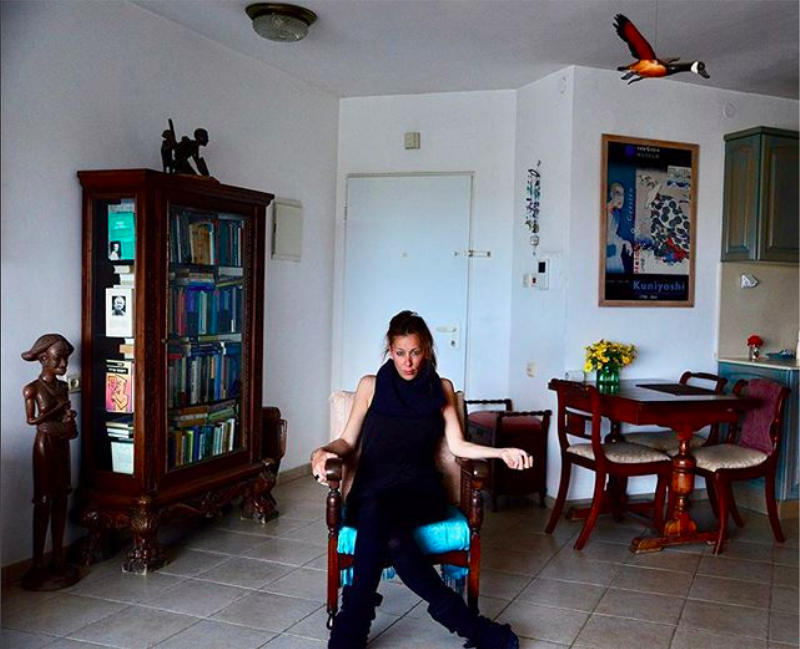
—————How was the Japanese study in the university?
Anat: I do remember one teacher, his name is Jacob Raz.
He studied in Japan in 70’s and had this vast knowledge about Japan from its tradition to the modern society. Also he was one of the very limited foreigners that Yakuza let enter their life and he talked a lot about what he saw. Every course he gave, I was like, “Wow!”
In 2000 in my last year at the university, I applied for the Monbukagakusho Scholarship for the first time. I really wanted to come to Japan to study, and financially the only option for me was to get a scholarship. But I didn’t pass at that time.
—————Then in 2006, you got the scholarship right? How did it happen?
Anat: After I graduated from the University, I went to an art school to study photography and started to work for a newspaper in Israel as a producer a few days a week.
In 2004, I married my now ex-husband who worked for the same newspaper. We moved to Jerusalem. He is a photojournalist and opened his photo agency with his business partner. After that I would help him with his office.
I wasn’t planning to get the scholarship at all, because I was already married, I had a life in Jerusalem. Also I was 30 years old and I thought the age limit for the scholarship was 30.
Then one day, I went to speak with someone who worked at the Japanese Embassy in Tel Aviv.She said, “Soon another period of application for the scholarship will start.” Also, she said that the age limit was 35, and there was only 3 weeks till the period would be closed.
Three weeks felt impossible, as you have to write a study plan and everything. Somehow though, I managed to do it and ended up getting the scholarship.
—————How did you make up your mind to come to Japan?
Anat: After all, it was very easy to decide. It was a long-time desire – my dream. Those who knew me, they were not surprised at all.
Also, my ex-husband was willing to come stay in Japan for 2 years during my study. He was going to work remotely from Japan, and if he needed to go back to Israel sometimes, he could.
 Anat Parnass “JAPAN DIARIES 2006-2016”[/caption]
—————It was the first time for him to come to Japan, right? How was it for him?
Anat: I think initially he was pretty happy to come to Japan, though it was a challenge for him after all. Things were very different from Israel. Plus, soon after we arrived I already had Japanese language courses, and there was no one he could talk to while I was not with him. He was a bit lost.
On top of that, at that time our relationship was already not so good. Then in 2006, there was the Israeli Lebanon war and he went back to take pictures for his work, and he didn’t come back to Japan after that.
I visited him in Israel a couple of times; we kept on discussing our relationship. Then in the summer of 2007, I visited him in Israel again and we got divorced.
So it was very difficult for me with the situation for the first few months. Though only after he left, I truly started enjoying time here. Slowly I started to feel that I am really here, making my own friends.
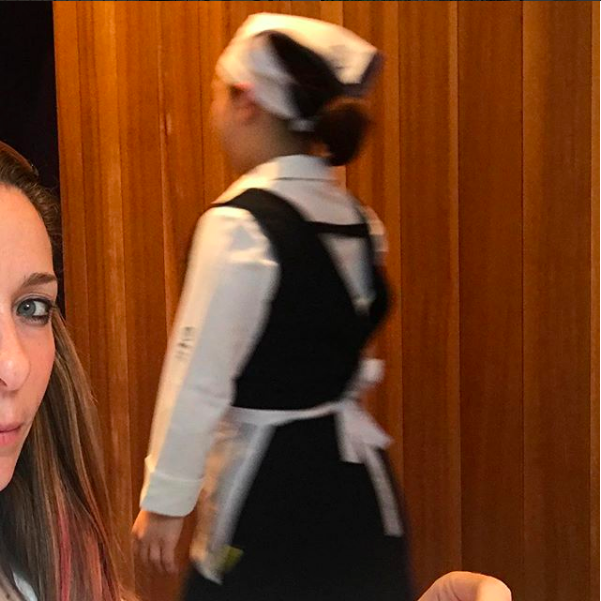
Student life in Japan
—————How was the student life in Japan? How was it different from studying in Israel?
Anat: The first year was for Japanese language study.
After that, I entered the graduate school of Nihon University College of Art. The general atmosphere was very different from Tel Aviv University, in terms of interactions and the level of how students would take part in classes.
It was something that shocked me in college; there was no dialogue in classes. As classes were held all in Japanese I couldn’t understand everything, but other students rarely asked questions or had a dialogue with other students.
In Israel, it is very normal to interrupt a lecturer and say your opinion or ask questions sometimes. I believe it is important to discuss with other students, especially in certain studies like philosophy, art and design.
Though at the college, a professor would talk for 90 minutes and the class is over. I was in an art college so it was supposed to be like crazy, but it was so not crazy. This was very peculiar for me.
Also, I felt the demands for Japanese students were not so high compared to Israel. As students, we were asked to do more in Israel.
—————Did you discuss the impression you had with other students?
Anat: With foreign friends, yes. What I heard from them was more or less the same as what I saw and felt. With Japanese students, no I didn’t.
Later, I worked at a high school in Tokyo as an English teacher, and what I saw there was the same. They didn’t ask questions, didn’t have open discussions.
There is this atmosphere in the class, where you don’t want to be the one to disturb, to offend your teacher, to be stupid, even if you’re not totally agreeing with what teachers are saying.
Now I understand it’s part of the culture and the system; people don’t ask questions, people don’t go saying things against the system. It’s about designing kids.
Society expects them to act in a certain way. This Japanese educational system is one of the things that, now as a mother, make me question myself about my daughter’s future in Japan. Soon I will have to think through how and where she should receive her education.
—————While you studied at the college, how did you cope with the situation in classes?
Anat: It didn’t bother me too much. Apart from some mandatory classes, it was more about working on my own things, consulting with a professor.
Actually I enjoyed my student life a lot. My advisor was Professor Takafumi Suzuki. He is one-of-a-kind, very open minded, and someone I can discuss this system in Japan as well. He is not only an amazing tutor but also eventually became like family to me.
While I was a student, I did my first photo exhibition. I also worked with a Japanese photojournalist, Ryuichi Hirokawa. I got Master’s degree in 2009 and also received PhD in 2013.
In 2009, I started to work as a teacher in high school and later at an elementary school. I was teaching for 6 years until I became pregnant. My daughter is now 3 years old. These days I work on my photography while working as a personal guide for foreign tourists here.
Being Israeli, Being Japanese
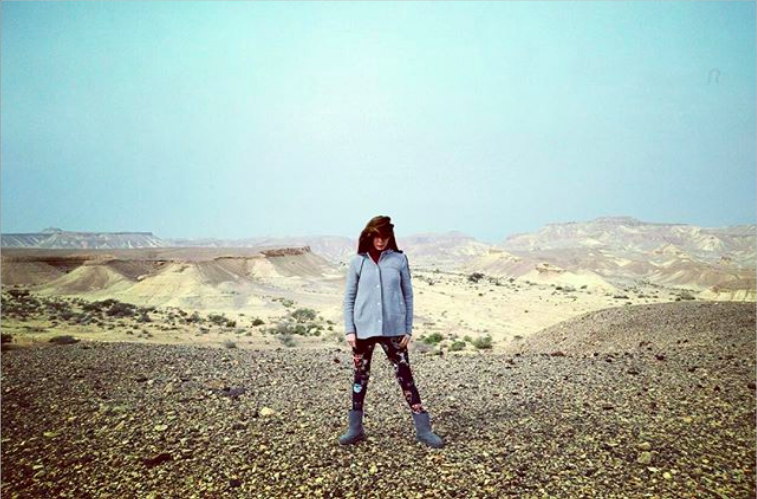 In a desert in Israel[/caption]
—————You have lived in Japan for 12 years now. Do you think you have changed?
Anat: Being in Japan taught me to be more conscious about what situation I am in and who I am with, and that not everyone wants to hear your opinion. I have become more thoughtful too, I think. This is something that I’m very happy about. At the same time though, I am so “Israeli”.
—————How would you describe “Israeli”?
Anat: Well, with my Israeli friends, we kiss and hug each other, speak very directly and openly about anything, and this is a part of me.
Maybe this is a good example to explain “Israeli” — sometimes I have Israeli travelers to guide. Three minutes after I first meet them, they would ask the most personal questions like, “So what, how come you ended up with a Japanese guy, why not Israeli?” without even apologizing. This is Israeli [laughs].
Because I am an Israeli single mother of a child with a Japanese man, they are curious about me and don’t mind asking lots of private questions. So it’s definitely different from Japan.
—————Has your perception about Israel changed after you moved here?
Anat: Sure. I have become more aware that, in Israel people don’t have the same sense for public space like in Japan. In Israel, people think it’s okay to do anything even in public space. Everyone does what he/she feels like, says his/her opinion, and uses smartphones too freely. People use horns intensively while they drive, you know. It is loud.
If you go to Israel for a 2-week vacation, I think you would love it. When I visit Israel these days though, it’s difficult for me to imagine living back in the atmosphere. Especially with my daughter growing up, apart from the political situation, that I am really against.
Sometimes Israeli travelers ask me, “Don’t you miss Israel?” Of course, I do miss some parts of Israel. Though I say,“Don’t be angry if I would tell you that I don’t miss living in Israel. You see how polite people are here, how clean and comfortable it is.” This is the dialogue I often have with them. In Japan, you give respect to others. After experiencing it for 12 years, it’s hard to go back.
Incident that made her question whether to stay in Japan
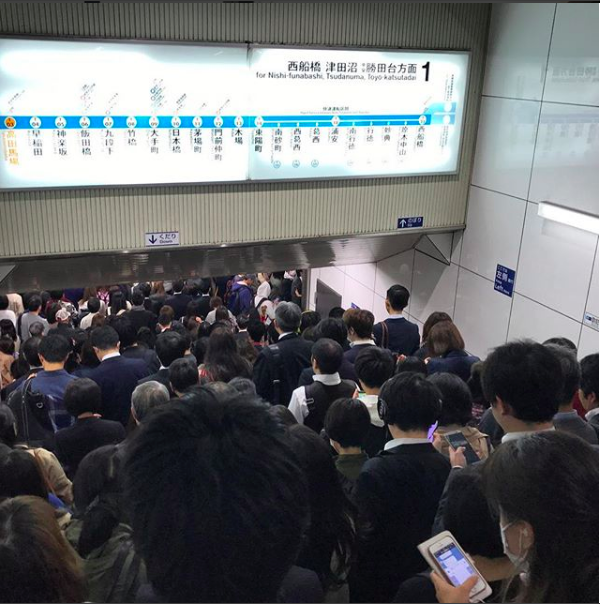
———- Can you name a day that stands out in your memory in Japan?
Anat: If I would pick, there were actually a few times that I thought I would leave Japan. The first time was in 2007. I was dating this Japanese guy. He smashed my head in public at Roppongi station.
I was amazed by the fact that no Japanese people helped me. Those who helped me were foreigners. We were at the platform, but many Japanese people acted like nothing happened or they didn’t see it.
Then the second time happened in 2013. The same person tried to break into my apartment, even though I hadn’t see him at least for 3 years. It was in the middle of the night, he was completely drunk — started banging on my door and screaming horrible things in English.
I called police and it went on until 5 in the morning. Then again, not one of my neighbors would do anything. They didn’t even open their windows.
This is something that I still don’t like about Japan, the negative side of this not-interfering-with-others. With all the respect I have for Japan, these are times I felt I could not live in a place where people don’t help you — in this kind of situation. After that I moved to another apartment.
Being a single mother in Japan
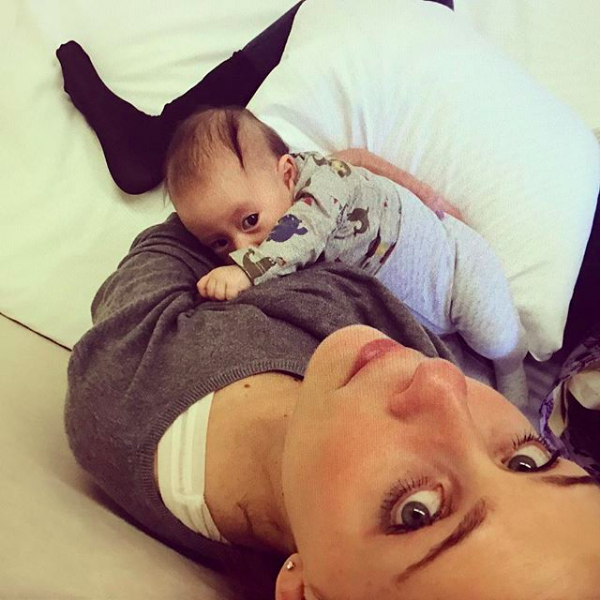
—————What do you feel about being a mother in Japan?
Anat: The attitude towards motherhood in Japan is very different from Israel. In Japan, once you become a mother there are many things that you are not supposed to do anymore.
For example, having a babysitter to go have dinner is normal in Israel, though here it is not. People in Japan, including mothers themselves, don’t think it’s good that mothers go out at night or go to a party.
—————Do you hang out with other mothers in Japan?
Anat: Since my daughter was born, I have been interacting more with Israelis in Japan. There is this Israeli mother group here, I count on them a lot these days.
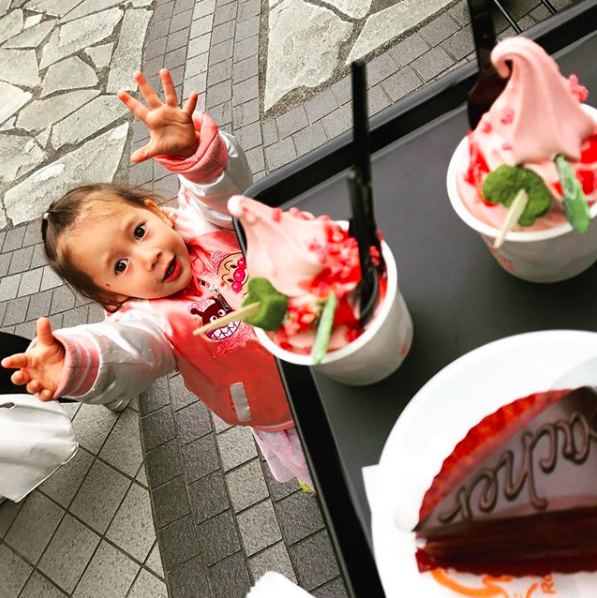
I am going to be very honest with you, I feel like we don’t have much in common with Japanese mothers. I prefer Israeli-mother company now. Mothers I meet in kindergarten in Tokyo, it’s been already 2 years but all we do is just say Konnichiwa. I barely even know them.
Though I am not going to raise my daughter in Israel, I want her to interact with as many Israelis as possible, not only for Hebrew but for the atmosphere that I love about the country.
At the same time, there are things about Japanese culture that I want her to inherit, to be thoughtful, to think about others.
Becoming a mother in Japan made it clear what I like and what I don’t like about Japan. I started to see things from a perspective that I didn’t have before.
—————What was the biggest challenge or the difficulty you had after you relocated here?
Anat: It is to understand people. It is still difficult. I feel like Japanese people have different personalities, depending on where they are and who they are with.
Like, now you are with me in a certain situation, but then if you go to your parents, you would be “you with your parents”, and if you go to work tomorrow, “you would be you with your colleagues”. You expose different aspects.
In Israel, you are who you are more or less, anywhere you are. I’m not saying that I speak to my boss in the same way I speak to my mother. Though if you spend some time with someone, there will be no big surprises about that person.
Here there are many bubbles of human relationships that don’t mix. In Israel, if there is a good friend, he/she knows my family. Though even my very good Japanese friends, it’s normal that I have never met their family even if they live close. Sometimes I wonder, “Do I really know my Japanese friends?”
————— In my case, I feel like it is not even something that I do consciously.
Anat: That is exactly what I’m trying to say. People do it effortlessly; it’s part of being Japanese, being raised as Japanese and living in Japan. I will always feel like an outsider here, not only because of the way I look, but also because the limited way that people interact.
Conflicted feelings for Tatemae (public face)
—————What do you miss the most about being in Israel?
Anat: I would say direct communication. On top of everything we talked about, there is also this Tatemae (public face) in Japan, which can be frustrating to me sometimes. You cannot get a straight answer, and you don’t even understand the person in front of you.
Though at the same time, this is something that I highly appreciate in Japan too. In Israel, people can be too direct. There is beauty in directness, but of course it could be very offensive in certain situations.
In my opinion, in Israel if you don’t say what you think, you may be taken as a cold person or a hypocrite. Though this is not hypocrisy, not at all. It is to maintain harmony, and for things to function. Sometimes you have to not show things about yourself. I know this is contradictory, though I have this feeling all the way.
—————Would you consider relocating again?
Anat: Since my daughter was born, I have been thinking about it a lot. Though I have lots of love for Japan. I think about her future, Japan’s future and also I feel very lonely these days.
I miss communicating with others, but Tokyo is a big city and it is not an easy place to get around with a pram. Also the winter here is really hard for me too. So considering all that, I have a couple of places abroad in mind.
Though the first option may be Chiba prefecture in Japan, where there is more nature for my daughter, and a bit closer to her father. First, I’m thinking of moving there and see how things go.

Anat Parnass Photography : http://anatparnass.com/