
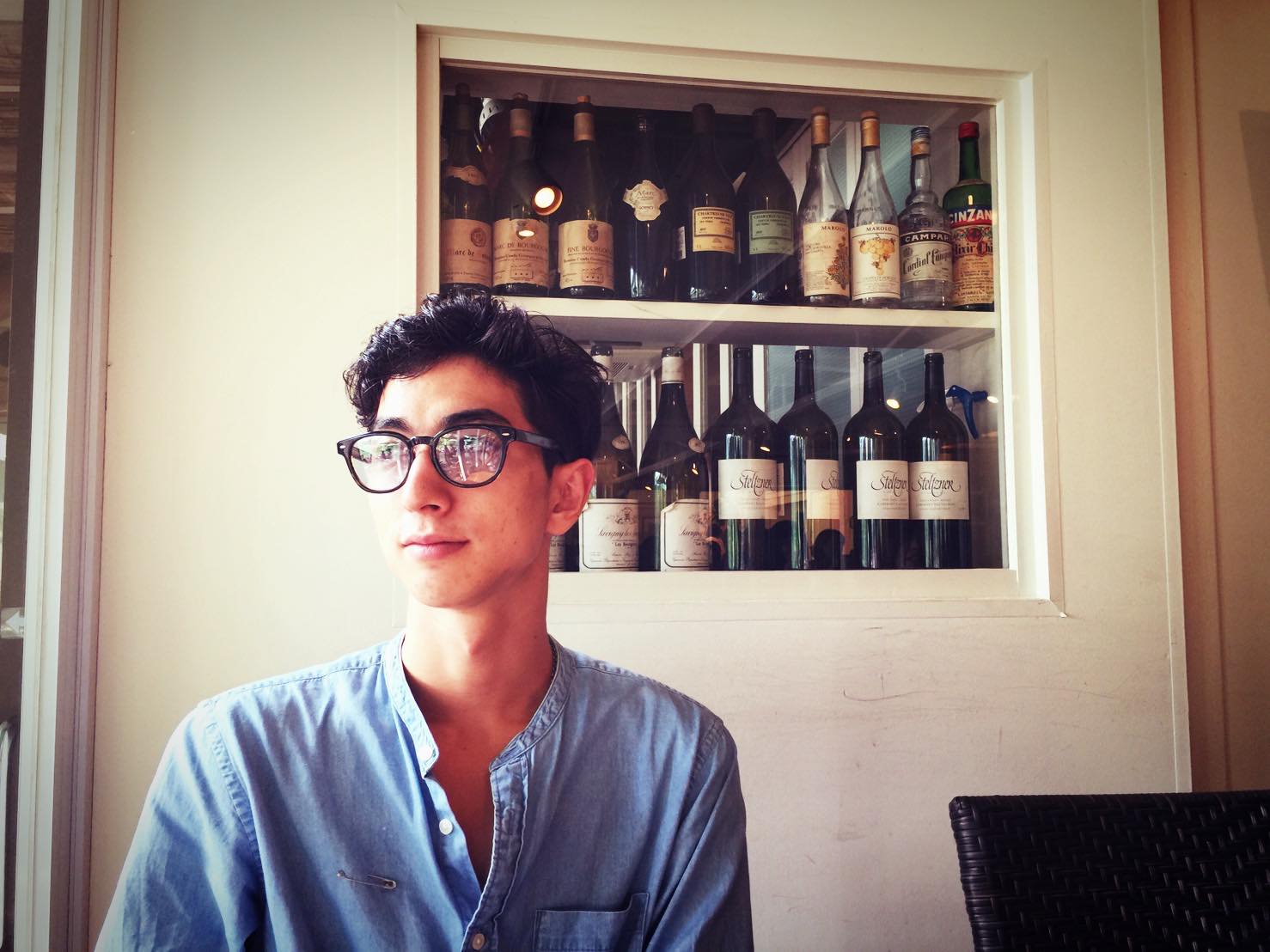
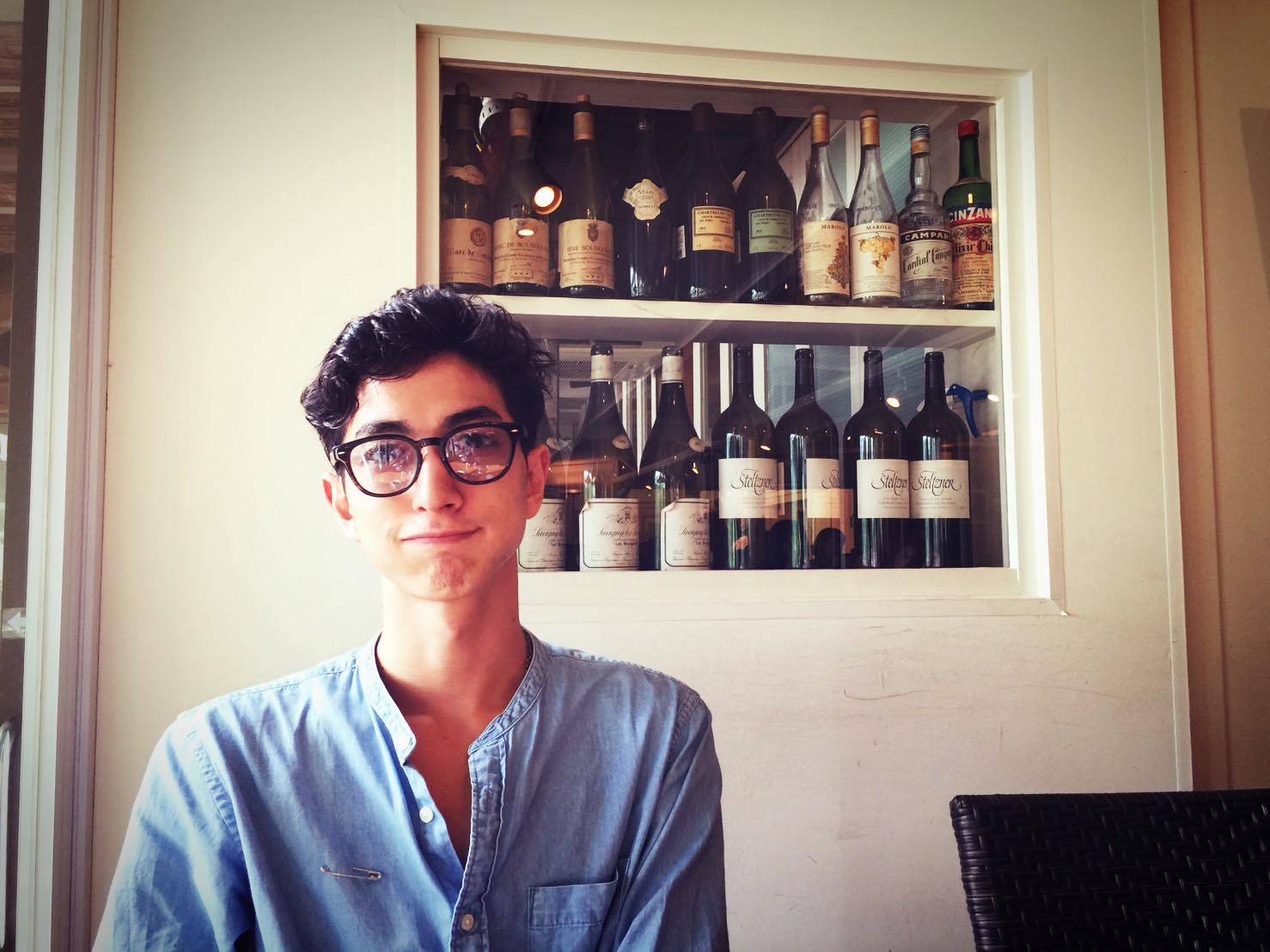
Andy, who has an American father and a Japanese mother, has lived inside and outside American bases since he was little. While he reminisces the time spent in Okinawa, he shares his struggles with his childhood flowing back and forth between two cultures.
Profile
Name:Grant Shinya Andrews Age: 21
Right after Andy was born in Okinawa, his family moved to California. His family went back to Okinawa when he was 4 and lived at Kadena base till he turned 11 years old. Then the family moved out from the base to the city of Okinawa. Andy has moved to Tokyo after graduating highschool and is now a student at Bunka Fashion College and also works as a model.
Going to Japanese school from America
————— Do you associate yourself as more American or Japanese?
Andy: My emotional expression is based on American upbringing, but when I get a sense of something and react, it is more of a Japanese way. Having lived in America till 4 years old, I think I have adopted American values. Then I went to a kindergarten in Japan and I think learned how to understand things from a Japanese perspective.
————— Inside the airbase, did you feel that you were in America?
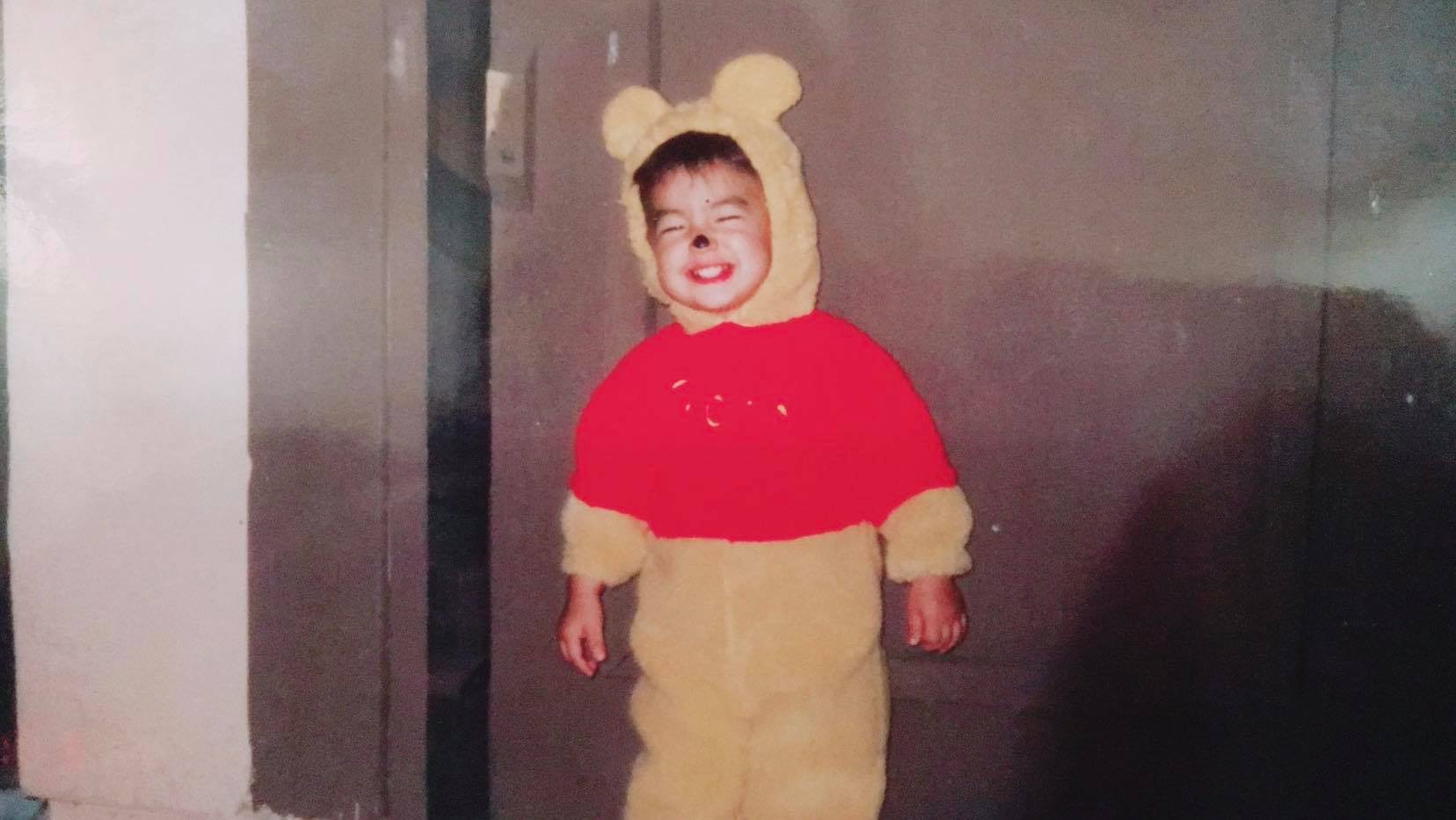
Andy: It felt quite extraordinary. There weren’t any social activities within the airbase, so during the summer time people would hang out at Japanese summer festivals nearby. Or when a new video game came out, we were like, “Let’s go to the toy store off base.”
Though everyone was American and interacted as Americans, people did the same things as Japanese for enjoyment.
Our family lived inside the base but I would go to Japanese kindergarten and schools. It felt like going to Japanese school from America, just that there was no commuting by plane.
—————Why was the decision made to send you to school off base?
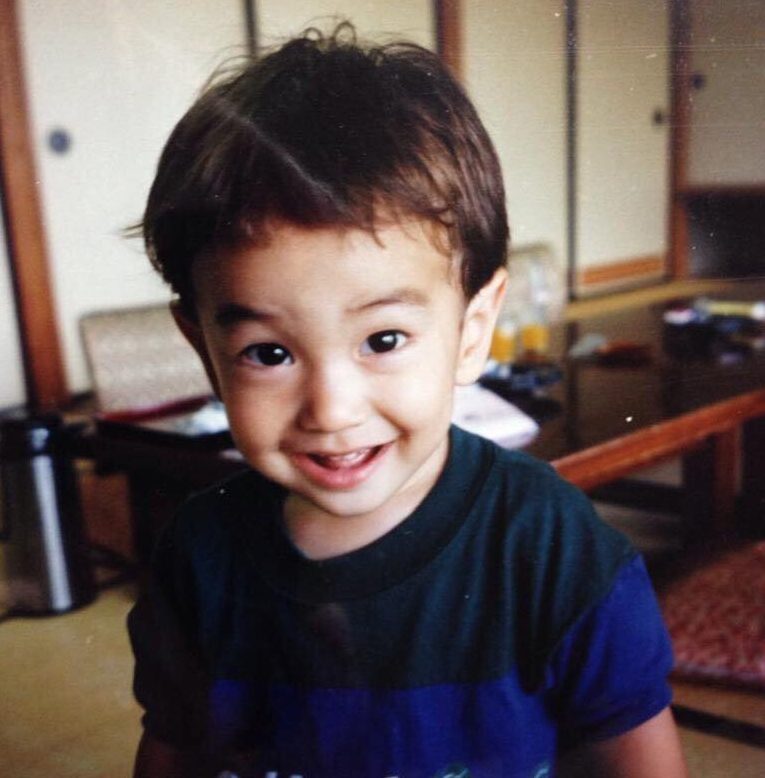
Andy: Apparently I chose the Japanese one when my parents asked me whether I wanted to go to school on or off the base or. I don’t remember any of this.
Typically when a father works in the army, most of the time his children will go to school on the airbase.
—————How did you feel about the cultural differences when you were little?
Andy: It was very confusing. I strongly felt that they were very different from one another. It was not even like I hated it but felt like aliens kidnapped me. I felt homesick even if I was home. I just wasn’t sure where my home was.
—————You went to school outside the base for elementary school, too right?
Andy: Right. Though actually I wanted to go to school within the base. So I objected to study at the Japanese school.
When am I going back to America
—————How did you object to it?
Andy: I objected the subjects that are related to Japan, like national language and social study. As for ethics, I rejected it depending what was being covered.
Though I was interested in ethics in general, when it was about Japanese ethics, instead I read books and escape inside my own world, refusing “Things about Japan.”
Living on the base, I felt like “Why do I have to study Japanese when everything around me is in English,” or “I don’t need it right now.”
Usually people move to another base or go back to America within five years, so I would think “when am I going to go back to the States?” My father’s contract had been renewed from when I was 4 until I became 21, which is very unusual.
—————Though I feel like it was possible to switch to school back on base at some point?
Andy: I am sure my mother knew how I felt, seeing me crying and asking to change constantly. There had always been an option to switch back to school on base.
The only reason it didn’t happen was because my mother is a very upstanding person, like “Stick to your decision and see it through”.
I understand that she was trying to teach me something important, though it was a bit too much for a 4-year-old. I wish she felt this way after I became a junior high student.
—————How long did you refuse to study?
Andy: Up until about 4th grade. There was this teacher who was very sincere and passionate. Even when he would join students playing dodge ball, he would throw a ball so seriously. I really liked him.
One time he asked me, “Why don’t you study?” and then we talked about it. I cried. That’s when I thought I would give it a try. After that I slowly started to study and read Japanese books.
Fluent in English not knowing alphabets
—————When did you move away from the base?
Andy: In the beginning of 6th grade. My father’s work in the military continued, but this didn’t include living on the base and we moved away from the base. I changed schools at the same time, making new friends all over again.
—————That means that you were in an only-Japanese language environment other than your house, right? How was that?
Andy: I had no problem with the Japanese language, but all of the sudden my mother started to encourage me to study English as she realized that there were English classes in junior high, even though we moved to a Japanese language environment.
Up until then I had never studied English, so I honestly didn’t know my ABCs or phonics. It was easier for me to speak in English to express my feelings, but not when it came to reading and writing – not at all. When it came to reading and writing, I was much better at Japanese.
—————How did it feel to study a language you already speak?
Andy: It was so hard to understand it because I knew it too well.
Japanese was the language I studied before that, and in the case of Hiragana (Japanese alphabet), あ(a) is always pronounced as あ(a), right? But in English, A could be pronounced as “a” or “ei,” so I couldn’t get it.
My father would teach me English, and when I asked him “When do you use the letter C?” and he answered “It’s C for cat.” But I was like “there is no sound of C (si) in cat though.” My father didn’t understand that in Japanese Hiragana, a letter is always pronounced the same, so I think he didn’t get what I couldn’t understand. It was like a clash of what’s common on each side.
Relieved to leave for Tokyo
—————What was your high school like?
Andy: I wanted to study design and went to a high school that had a computer design course. That was a school that most of students were Anime Otaku or girls who like BL manga. Everyone had quite a character, so rather I felt very welcomed.
—————You came to Tokyo after graduating high school, right? Were there other cities you considered as well?
Andy: I wanted to go to school to study fashion or design. Then my parents said that I could only go to an area where our relatives live. They are a bit over protective, you know.
Initially I wanted to go to America, but there was no place that would meet their condition. My grandmother lives in Tokyo, so I thought I’d like Tokyo then.
—————How did you feel when you left for Tokyo?
Andy: I felt a bit relieved to leave and go somewhere new. Like I could reset everything I had been through until then.
I could stay away from the airbase in Okinawa, which I personally would rather not discuss. Plus I had conflicts with my parents and could put some distance between us. Also, I was happy to come to Tokyo, which is a major fashion and art scene.
—————Is there something you miss about Okinawa?
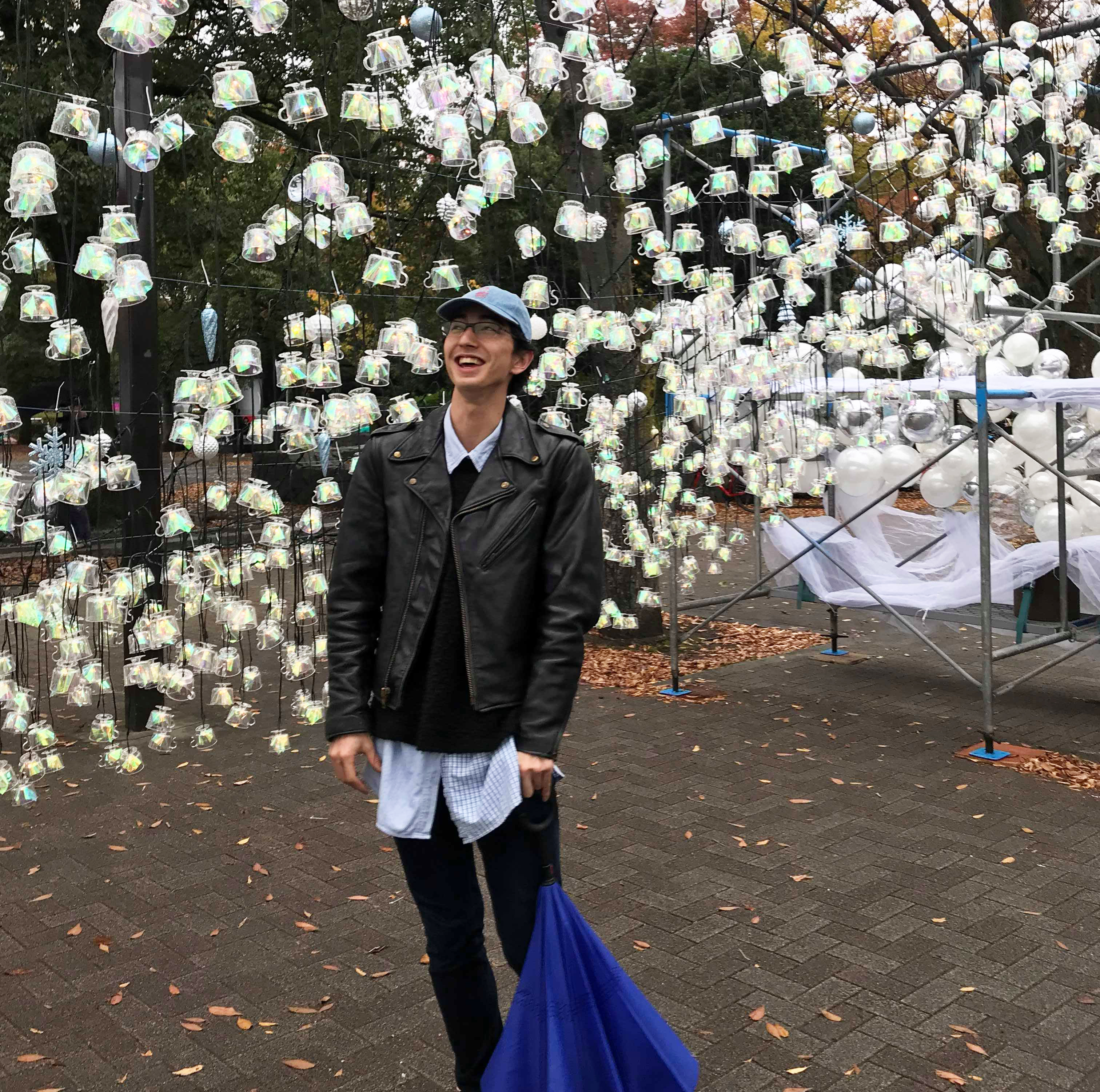
Andy: There are many things. Starting with the big sky there. I miss how it felt so nice under the expansive sky, and how I could truly chill out, and enjoy relaxing conversations with people.
Plus, there is this Champuru (Mixture) culture in Okinawa; it is still Japanese, but somehow very different. It’s a specifically Okinawan sense of value, which has picked up Chinese culture, while Okinawa was Ryukyu Dynasty, as well as some of the American culture from airbase.
Once we had conflict in our family, and now
—————You have two older sisters, right? Do you talk with them about the family relocation?
Andy: I think we didn’t dare to talk about it until now. Because if we touch on the subject, we know that everyone will get emotional and say whatever, so we don’t dare do it.
When we moved from America, my oldest sister was already in the 4th grade. She went to school on base all the way through. She can speak Japanese, though she is not really good at Kanji (Chinese characters used in Japanese). My other sister is 2 years older than me. She went to Japanese school; it seemed to me like she fit in well at school, though I bet she went through hard time.
—————It appeared to me like it was the toughest time in elementary school, and then you started to work things out.
Andy: According to my parents, there was no time where I wasn’t rebelling.
I hated that I was living in Japan, hated that I had to adjust myself to Japan. I wanted to be raised in an American environment, and I hated my parents for not doing anything about it, knowing how I felt. I would rebel because I hated everything about where I lived.
Now I think my rebellious period is over, but it is still a part of me. Not that I want to blame my parents, though when conversation touches this subject, I can’t help but be hard on them.
I have talked about these kinds of feelings before with them when I got emotional, so they know how I feel. This is still a sensitive topic that we don’t actively talk about.
I think we are pretty happy family. In old times we would have fights, as we were in a difficult environment. Everyone carries something to oneself and struggle on one’s own, so in my mind the challenge from now on is to improve and be better. I hope we keep getting along and can get even closer.
—————Would you consider relocating again?
Andy: It’s not like I would search for my roots, but at some point I would like to live in America. To see how American I really am.
If not America, maybe the U.K. or Australia, to see how I would be like in English speaking countries.
I just can’t imagine me living in Japan into my old age. It would be good to start with just a few years abroad. I know I have to get at least outside of Japan once.
Andy Portfolio(Modeling Agency AVOCADO):
http://www.avocado.co.jp/models/male/andy