
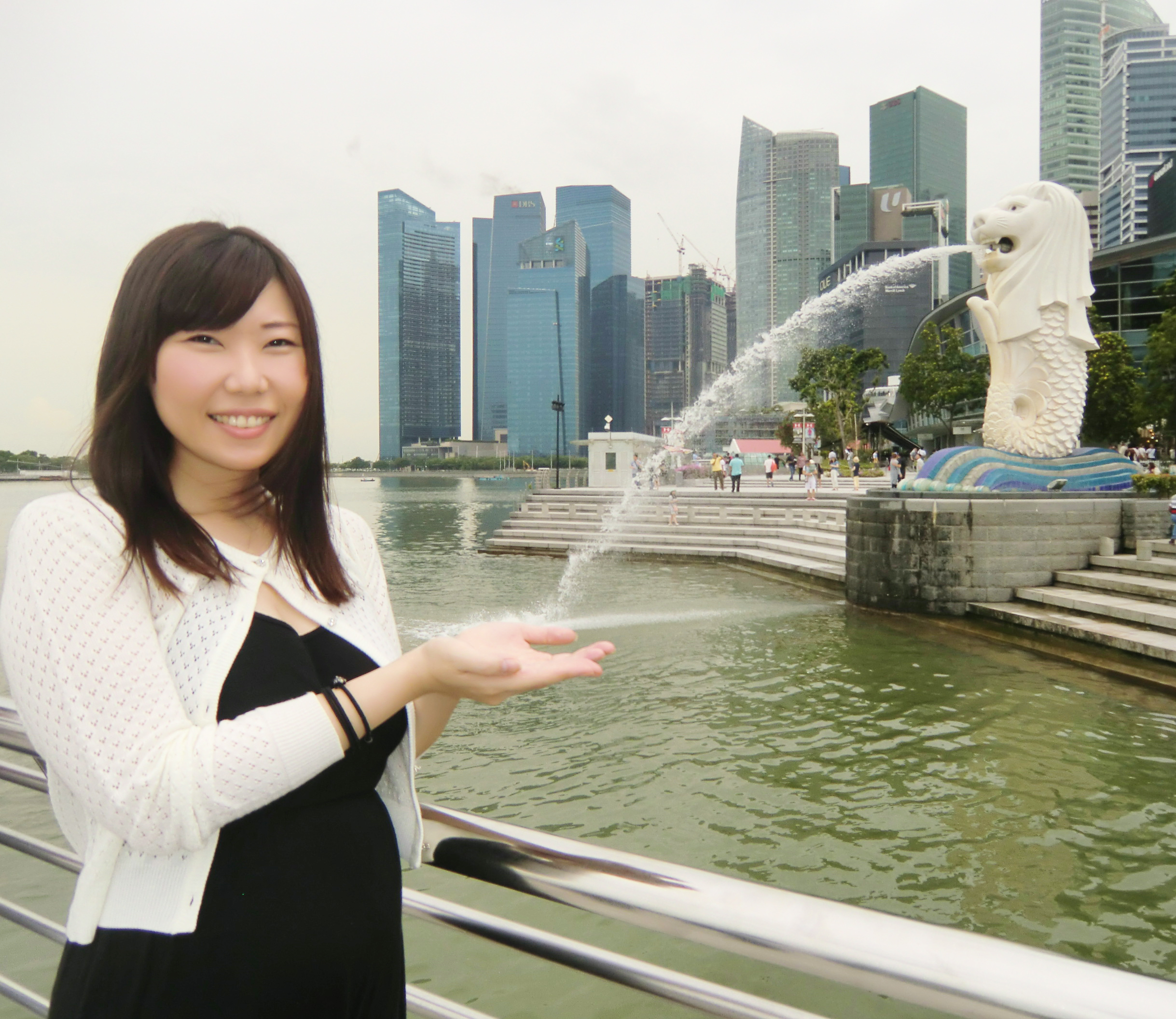
Yayoi moved from Tokyo to Delhi and worked for a company for more than four years. She relocated to Singapore when she got married. Yayoi laughs saying, “In India, I was ready to go into battle mode everyday,” on recalling her memories.
Profile
Name: Yayoi Iwami Age: 33
Yayoi was born in Niigata prefecture in Japan. She majored in Hindi in Tokyo University of Foreign Studies and visited India as a tourist while she was a student. After working in Japan after graduation, she made a career move and relocated to India in 2011. In 2016, she moved to Singapore after she got married and lives with her husband and two sons.
Traveling to India while in university
———-When did you start thinking of moving to India?
Yayoi: As I majored in Hindi in University, I was interested in studying in India, although back then my parents were against it. The idea of a young girl alone in India was something that made them worried, I guess. So I always thought I would move there once I started to make my own living and become able to take responsibility for myself.
While I was in university, I visited India as a tourist. In the beginning of my trip I remember I often bought some stuff at hideous prices. Like when I would go shopping for a sari, it was a rip-off price. I was a naive teenager.
So I got upset over that in the beginning, though as my trip went on, gradually I started to like it in India. I guess it was because I had opportunities to communicate with local, ordinary Indian people who were not targeting tourists.
Getting used to the meddling of others
Yayoi: During the trip, once I forgot my wallet in an auto-rickshaw. I got off at a youth hostel where I was staying. An hour later the person at the reception came to tell me “a guy from a rickshaw is calling you.” I came up and then he said, “You forgot your wallet.”
I was surprised that he was so kind to come all that way to bring it to me. After people were selling stuff to me in the beginning at ridiculous prices, and then I encountered such a kind person.
I said to him that I would like to thank him with a meal, but he said no. But I insisted I wanted to offer something to show my gratitude, and then he told me “ I would like just one picture with you.” I took a picture of both of us with an instant camera I had. After I went back to Japan I sent it to his address. I don’t know if he ever received it.
There were other things as well. When you get lost on the street in India, many people would gather around you to show you directions. It could be more like meddling rather than kindness. People would care about you as if it is their problem. As I saw and experienced those things, I thought, “All in all, I do like it in India.”
———-You came to like the personality of Indian people.
Yayoi: Yeah. The atmosphere of cities and buildings were wonderful as well, but what was most interesting to me was how people communicated differently from Japan. I accepted that other people meddling in my life was OK. I felt that the limited time allowed with travelling was not enough. I thought I would like to live there over the long term.

Changed jobs to an Indian subsidiary of Japanese company
———-How did you start the process of relocating?
Yayoi: After I graduated from university, I looked for an opportunity while working for a company. Back then I worked in the field of Japanese language education to foreigners. Then, when I was 26 years old, I made up my mind and started to look for a job online.
While I was searching, a Japanese employment agent came up that had an Indian subsidiary. I contacted them to see if they could help me find a job. Then they asked, “Why don’t you work with us?” After that I joined the Indian subsidiary of the company.
———-What were your expectations and concerns before moving to India?
Yayoi: I had no concerns in particular. I was filled with the excitement and happiness that I could finally live in India, which I had dreamt about, and I wasn’t thinking about much else. I had been there for travelling, I had studied Hindi, so I thought everything would be alright.
I wasn’t worried about the practical side of life either. Up until that time, my trips to India were kind of real cheap. I would stay in very cheap hostels. Sometimes they had no windows, other times windows were broken and mosquitoes would come in and out all the time. Having experienced this, I assumed things could not be any worse.
Things didn’t go as planned, my common sense didn’t work
———-What was life like after you moved there?
Yayoi: More than work or anything, it was very hard for me to set up the practical side of life, like finding an apartment. If you were an expat, your company would take care of all the necessary arrangements, including accommodation. Because I was hired locally, I had to do everything on my own.
When you look for an apartment in Japan, if you tell the real estate agency what you want, they will come up with a list of properties and you go visit the sites to see.
In India, even if I told them what I wanted, they did not provide me any list. You would just go to check out apartments that are available to see at the time. I was just told, “Sit in the back seat,” and then I held tightly to a young guy driving on a motorcycle to sites [laughs].
Even once you arrived at a site, it was normal that you couldn’t see inside the property because of a mistake they made with scheduling. Even when you got lucky enough to see inside, sometimes it was completely different from what was expected.
Sometimes on the scheduled day look at an apartment, the agency would forget or not follow up. My common sense in Japan did not work at all in India. Things did not go as planned at all.
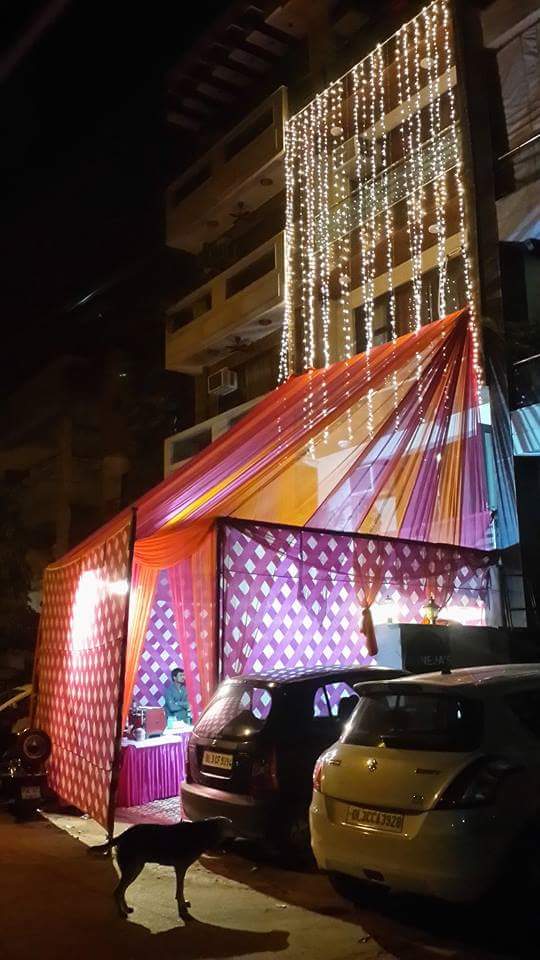 The apartment Yayoi managed to find after a long search. “Some other residents often held house parties with DJs playing music in large volume till midnight. No one seemed to think that it would disturb the neighborhood”
———-How long did it take to find your apartment?
Yayoi: I found it after about three weeks, but I decided to leave the place after one month.
———-Eh?
Yayoi: It is common among Indian middle class families to hire a maid for cleaning the house. As I felt uncomfortable about it, I told my landlord I was not going to hire a maid, that I would do the cleaning myself. He said, “No problem.”
But the landlord was planning to talk me into hiring one after I moved in. And then after I moved in he said to me, “Hire a maid or leave the property.” Since this wasn’t what we agreed I decided to leave and stayed for a while at my senior colleague’s house.
Even after I found another place, the furniture didn’t get delivered on time. On the day a bed was supposed to be delivered, it was nighttime when the delivery company informed me, “We can not deliver it to you today.” I slept on the marble floor with a sleeping bag.
Things like furniture deliveries are beyond my control no matter how hard I tried. Nothing would move forward unless I tackled them while half giving up. There were many situations that I could not have control over. It was pretty stressful for me as a Japanese person who just came from Japan.
Differences in the ways we work and conduct business
———-How was the company?
Yayoi: People in India are very caring and kind. At the company, two thirds of the employees were Indian. They willingly came and talked to me and were kind and friendly to me. I felt closer to coworkers in India than I did in Japan.
Besides, I felt that the attitude towards deadline and quality of completing work was different. In general in Japan, people would work to get projects completed well and in a timely manner. But in India, I got the impression that people wouldn’t work as hard or to the same standard, say 60% effort.
I assume the mindset of customers might be also different. In Indian society, I guess if a customer requires any change from the deliverable of 60% completion, they make changes accordingly and that’s okay.
The company I worked for had Japanese clients mostly, so even though it was in India they would expect the same service and turnaround as Japan. So sometimes I had to arrange the project so deliverables would have a higher quality.
Normal to bother others or to be bothered by others
———-How do you think living in India for four and a half years changed you?
Yayoi: It’s a small thing but apparently I developed a habit of lining up very close to someone before me. Once I was in line at a convenience store in Japan, apparently I was standing so weirdly close to the person in front of me. I was surprised when the person looked back and shot a disbelieving look at me [laughs].
In India, you can get cut in on unless you leave only a few centimeters from the person before you. That moment I realized that I adopted Indian behavior.
Also, I think I have become able to rely more on others than before. In Japan I used to think I should solve my own problems so I wouldn’t bother others, and I was raised to be that way. But in India, it is normal to bother others or to be bothered by others.
Once someone told me that in Japan people are raised being told, “You should not bother others”, whereas in India they are raised being told “You are going to bother others as long as you live, so you have to accept others when they bother you”.
———-That is kind of nice.
Yayoi: Yeah. It is kind of like forgiving and being forgiven. So they would not apologize for just bits and bytes, but in reverse, they would never get upset when I bother them. That let me think that it is okay to rely on someone. Maybe it is a little bit easier to live that way.
———-During the four and half years you lived in India, were there any other difficulties than finding an apartment?
Yayoi: Difficulties… I can’t think of many other things. Of course with my job, there were many things for me to learn and it was not easy. But they let me do things that I would not have been able to do in Japan, which was very rewarding.
Looking back my life as well from a practical view, it was easy for me to live in India. In Japan, I often hear people saying, “It is rough in India,” though I never encountered any dangerous situations.
In my opinion, if you walk on a dark street by yourself late at night then it would be of course dangerous just like in any other countries. But I don’t think that’s specific to India.
Meeting my husband and getting married in India
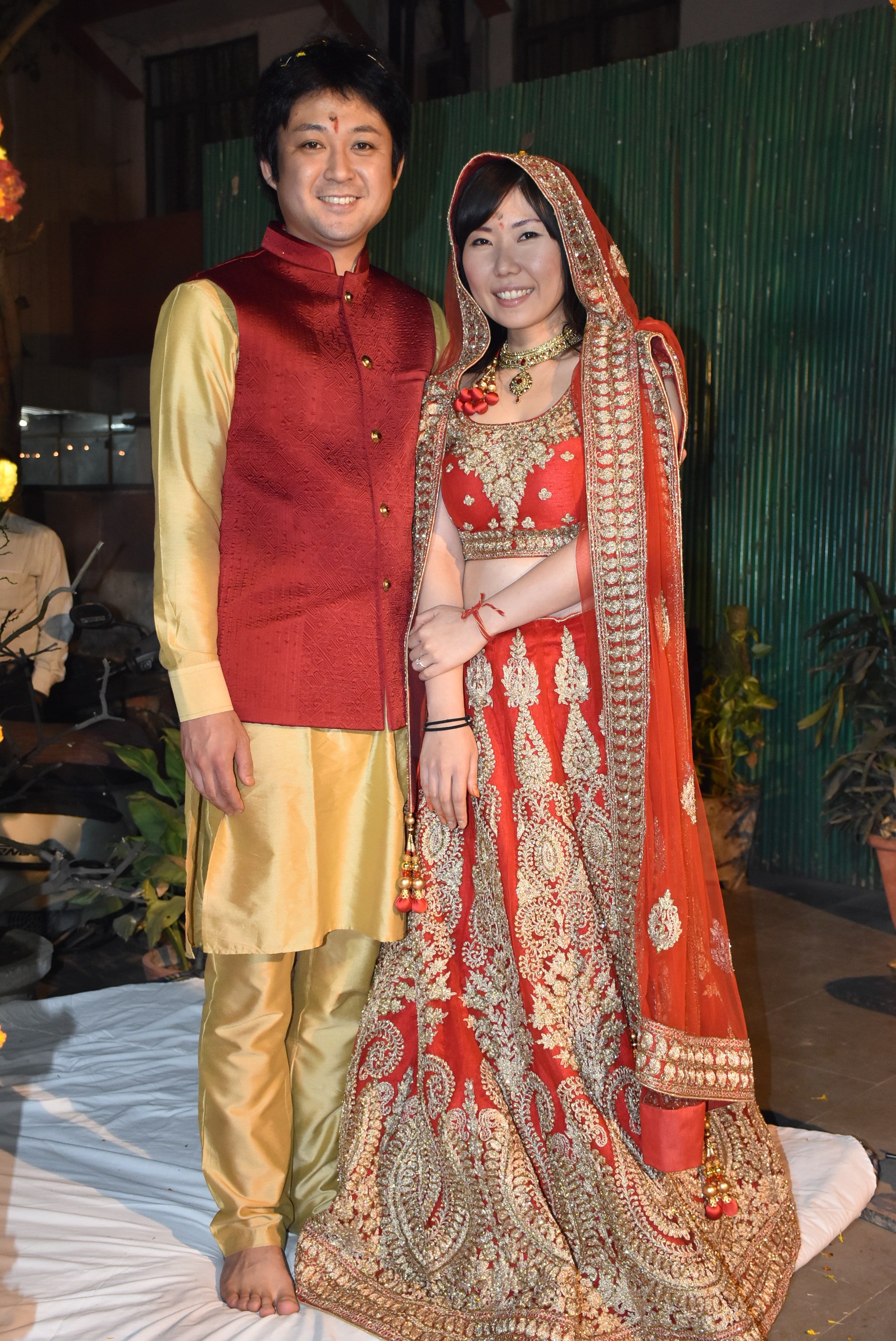
———-You relocated to Singapore when you got married right?
Yayoi: Yeah, for my husband’s work. We got married in 2016, and moved to Singapore to start our life together.
———-Can you share how you met him?
Yayoi: We got to know each other in a Japanese community in India. He moved to India as an expat, and he was enjoying it there. He had friends that were Japanese and Indian, and that was something I liked about him.
It is not uncommon for expats to put some distance between Indian societies so. I guess he and I shared the same sense of belonging in India. It was fun for me to be with him.
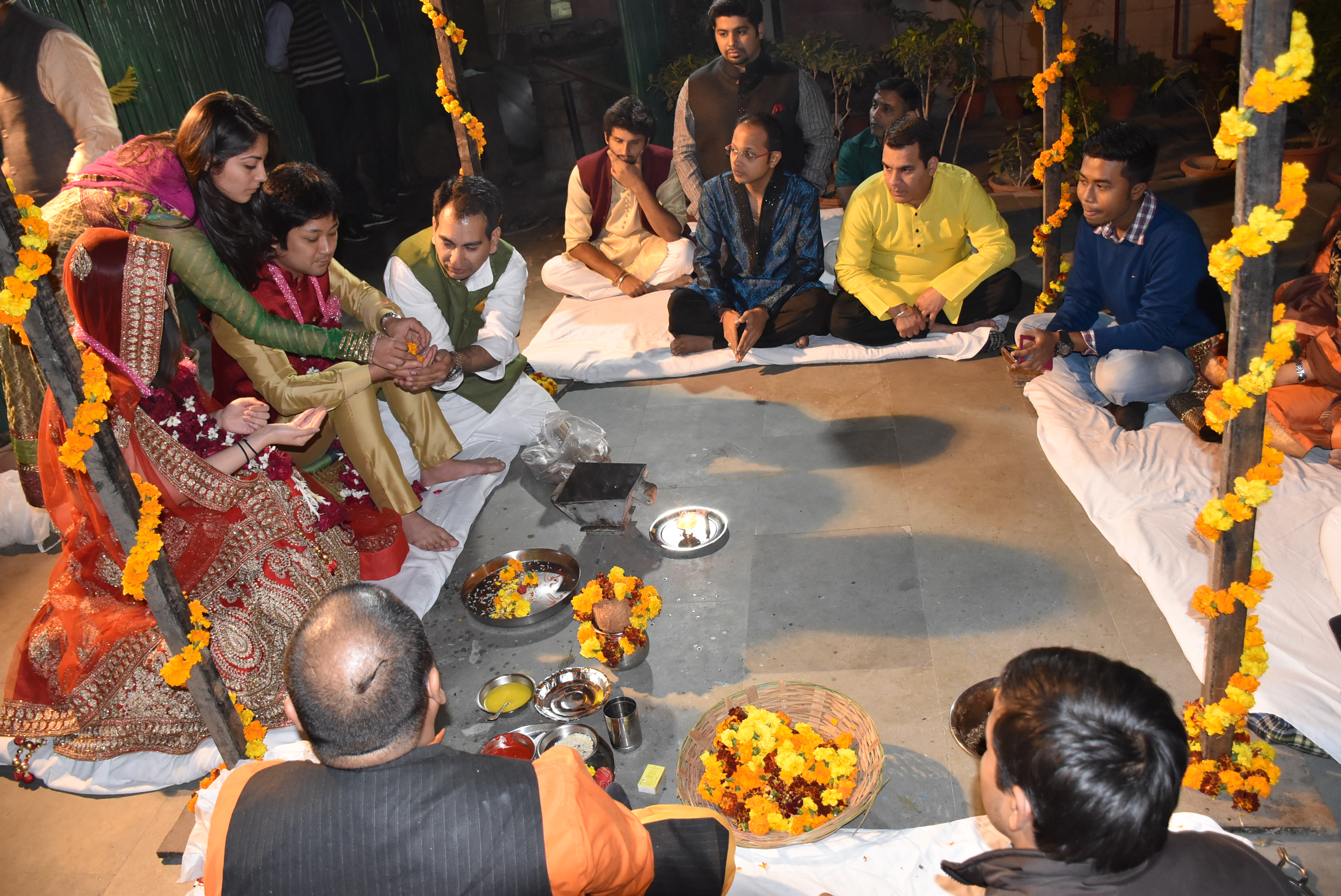 “We had an Indian wedding ceremony in a temple as well.”
———-What is Japanese community in India like?

Yayoi: There is a group called the Japanese Association, which have seasonal events such as summer festivals and a year-end party. They also have same-year-born members gatherings, or other club activities for tennis, football and such.
In India there are not many Japanese residents compared to other countries, so people are very cohesive like, “let’s help each other.” The community is small and if you were Japanese you would recognize almost everyone.
Not everyone was there because they liked India or they chose to be there like me. There are many who spend their time counting down until they could leave. I guess they needed to find something that they can enjoy inside the Japanese community to release their stress.
———-What was the best thing about living in India?
Yayoi: The best thing was that I have no regrets in life. If I didn’t go there, I would always be wondering, “what if I moved to India?” I have done everything I wanted to do that led me to where I am now; I have no regrets in my life at all. That is something that I am very happy about.

Kindness of people in Singapore
———- How is life in Singapore compared to Delhi?
Yayoi: It’s not much different than Tokyo. When I was in India, I was in battle mode everyday. Both good things and bad things were happening like a roller coaster. Though in Singapore things go as planned, things that are surprising don’t happen often. We live our lives with less stress.
———-Do you feel the difference in communication in Singapore?
Yayoi: People in Singapore are kind and they would help you if you ask for it, but they don’t interfere with you as much as in India. In India, if you were lost on street, it would draw a crowd, though here I think people wouldn’t step in as much.
People in Singapore are very sweet. I was pregnant here. When I got on a train with my bulging stomach, everyone would instantly talk to me saying, “Come sit here” all at once. Even when I said, “It is alright as I am getting off at the next station”, they would say, “ it’s okay, go ahead.”
In the beginning I felt sorry for troubling making, so sometimes on a train I would surreptitiously stand at a corner where there was no seat [laughs]. Eventually I started accepting their kindness with gratitude.
Also when I had a shopping bag, someone came to me and said, “Let me carry that for you, where are you going to?” The other time when it was raining, someone came to let me in under the umbrella saying, “Let’s go together.”
If a stranger was that kind to you in Japan, it would surprise you. In Singapore people do it so naturally.
I want to live in place I have no idea about
———-Would you consider relocating yourself again?
Yayoi: Yeah, totally I would. It would depend on my husband’s job situation, but I would like to visit many different places as long as my health is good. I have this personality that lets me enjoy things in every environment I am in, without feeling any discontent, which feels pretty lucky. So I think I would be able to enjoy things without getting depressed no matter where I go.
———-Would there be any specific country in mind for instance?
Yayoi: Wherever would be good, but I would like it to be in a country which I have no idea about. Countries such as America and Canada, there’s lots of information about them so you can kind of imagine life over there to some extent. When it comes to Middle Eastern or African countries, it’s intriguing for me when I wonder, “what if I lived there?”
———-Well that’s everything. Is there anything you would like to add?
Yayoi: Hmmm, maybe I would like to say, “India is a good country” [laughs]. If you would like to work or live in India, I truly recommend you do it.
Even though there is a lot of negative images going around about India, that’s not the reality. The press covering India in Japan shows the aspects that are just chaotic or dangerous.
Maybe it’s because it is more entertaining to show those aspects. In the city centers there are way more cutting-edge buildings than in Tokyo, there are lots of kind people and it is more comfortable to live there than you would imagine.
I would like people to know more of the positive aspects. There may be some inconvenient things, but I believe India is a country that lets you experience something you would never forget for your whole life